Direct Mail Marketing for Real Estate Investors
Master direct mail marketing for real estate investing. Learn list pulling, cadence, response rates, and costs for finding non-owner-occupied properties.

Table of Contents
Direct mail remains one of the most reliable methods for sourcing off-market real estate deals. In an era of digital saturation, a physical piece of mail delivered to a property owner’s mailbox provides a level of permanence and directness that email and social media ads often lack. This guide is designed for the serious investor seeking to scale their acquisition of non-owner-occupied assets.
You will learn how to build high-converting lists, select the right mailer formats, and manage a consistent cadence. Whether you are looking for fix-and-flip opportunities or long-term DSCR rentals, the efficiency of your direct mail campaign determines your cost per acquisition and, ultimately, your ROI.
Success in direct mail is not about one-off blasts; it is about data-driven targeting and relentless follow-up. We will break down the exact metrics you need to track and the common pitfalls that drain marketing budgets without producing signed contracts.
Building High-Intent Lists for Direct Mail
The success of your campaign is 70% list quality, 20% consistency, and 10% the actual message. To find motivated sellers of non-owner-occupied properties, you must filter data to find situational distress. Sending mail to every owner in a zip code is a recipe for wasting capital.
Common high-intent filters include:
- Absentee Owners with High Equity: Owners who do not live in the property and have 40% or more equity are the primary target for bridge and fix-and-flip investors.
- Probate and Inherited Properties: Families dealing with inherited real estate often prefer a quick cash sale over a lengthy retail listing process.
- Code Violations and Liens: Properties with tax liens or municipal code violations signal financial or physical distress.
- Tired Landlords: Non-owner-occupied properties that have been owned for 10+ years often indicate a landlord ready to exit the market.
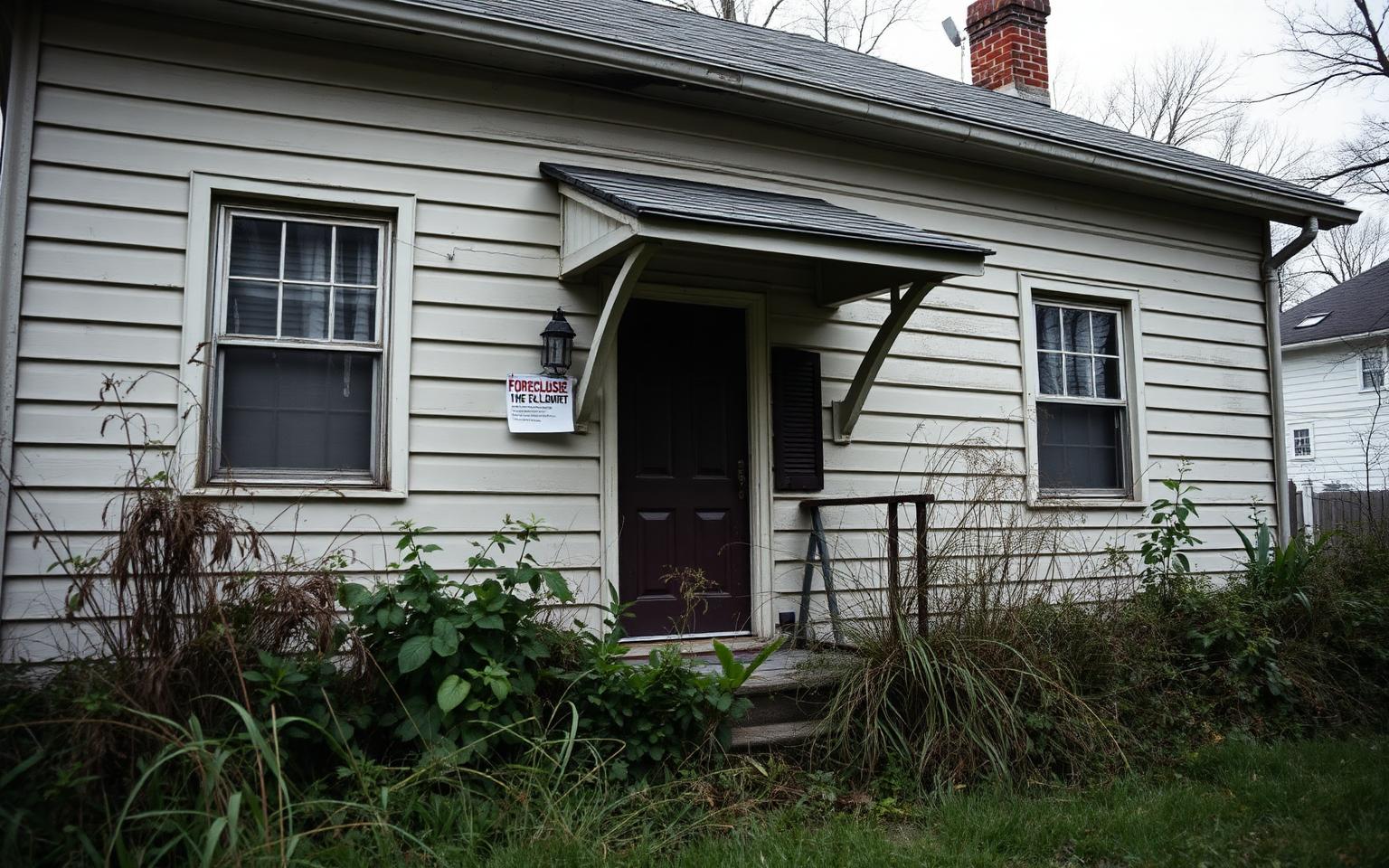
- Pre-foreclosure: A classic distress signal, though highly competitive and time-sensitive.
Choosing the Right Mailer: Letters vs. Postcards
Your choice of medium reflects your brand and the type of seller you are targeting. There is no 'best' mailer, only the one that resonates with your specific list.
Postcards (Standard and Oversized)
Postcards are cost-effective and have a 100% open rate because there is no envelope to open. They work best for high-volume campaigns where you want to stay 'top of mind.' Use 6x9 or 6x11 sizes to stand out from standard junk mail.
Professional Business Letters
A standard #10 envelope with a typed letter and a professional letterhead works well for high-value commercial assets or multi-family properties. It signals that you are a serious institutional or professional buyer.
Handwritten Yellow Letters
These are designed to look personal. While mostly automated by machines now, the appearance of a personal note can increase response rates among certain residential demographics. However, they can also attract 'window shoppers' who are merely curious about the informal letter.
The Importance of Cadence and Frequency
Most deals do not happen on the first touch. Statistics show that the majority of motivated sellers respond between the fourth and seventh touch. If you send one round of mail and stop because of a low response rate, you are throwing away your initial investment.
Plan for a minimum of 6-7 mailings to the same list. Space these out every 4-6 weeks. This ensures that when the seller's situation changes—such as a tenant vacating or a tax bill coming due—your contact information is fresh in their mind.
Understanding Direct Mail Metrics
To treat direct mail as a business rather than a gamble, you must track your numbers. If you do not know your cost per lead, you cannot scale.
- Response Rate: The percentage of recipients who call or visit your site. A healthy rate is 0.5% to 1.5% for highly targeted lists.
- Cost Per Lead (CPL): Total campaign cost divided by the number of unique leads. Aim for $150–$300 depending on the market.
- Cost Per Acquisition (CPA): Total marketing spend divided by deals closed. In competitive markets, $2,000–$5,000 per deal is common for fix-and-flip acquisitions.
- ROI: The net profit of the deal vs. the cost of the marketing campaign.
The Follow-Up System: Where Deals are Won
The phone call is just the start. You need a CRM to track every interaction. When a seller calls, you should be prepared to ask about the property condition, the reason for selling, and their timeline.
If a seller says 'not now,' they should be moved to a long-term follow-up sequence. Circumstances change. A 'no' in June could easily be a 'yes' in December when the property taxes are due again. Investors who win at direct mail are the ones who are the most persistent and professional during the follow-up phase.
Real-World Example
An investor in a mid-sized market sent 5,000 professional postcards to absentee owners with 50%+ equity. The cost of postage and printing was $3,250 ($0.65/unit). The campaign generated 45 calls (0.9% response rate). Out of those 45 leads, 12 were viable prospects. After three weeks of follow-up, the investor secured two contracts: one fix-and-flip with a $45k profit margin and one rental property acquisition with $20k in instant equity. Total marketing spend of $3,250 yielded a gross profit of $65k. This illustrates the power of high-equity targeting for non-owner-occupied acquisitions.
For illustration only — subject to underwriting.
Common Mistakes To Avoid
- 1.Stopping after only one or two mailings.
- 2.Using a broad 'every door' list instead of niche distress filters.
- 3.Failing to answer the phone live when sellers call.
- 4.Not having a clear 'Call to Action' on the mailer.
- 5.Ignoring the condition of the list (e.g., not scrubbing against recent sales).
Advanced Tips
- Use a dedicated tracking phone number for each specific campaign to identify which list is performing best.
- Include a QR code that leads to a simple landing page for sellers who prefer web communication over phone calls.
- Test 'Street View' images of the property on the mailer to increase personal relevance and trust.
- Combine direct mail with skip tracing and cold calling for a multi-channel approach.
- Target 'Zombie Foreclosures' where the owner has vacated but the bank has not yet finalized the foreclosure.
How Simple Solution Lending Helps
Successfully sourcing off-market deals through direct mail is only half the battle; you need the liquidity to close quickly once a seller signs. At Simple Solution Lending, we specialize in financing non-owner-occupied investment properties. Our bridge and fix-and-flip loans are designed for investors who need to move at the speed of the market, often closing in a fraction of the time required by traditional banks.
Once you have secured a deal via your marketing efforts, our team provides the leverage you need to renovate or hold the asset as a rental. We offer DSCR loans for long-term holds and aggressive leverage for value-add projects. Apply Now or get pre-qualified today to ensure that when your next direct mail lead calls, you have the proof of funds ready to win the contract.
Conclusion
Direct mail is a scalable, predictable way to find non-owner-occupied investment opportunities that never hit the MLS. By focusing on high-intent lists, maintaining a consistent cadence, and meticulously tracking your metrics, you can create a reliable 'deal machine' for your real estate business.
Remember that marketing is an investment, not an expense. The most successful investors view direct mail as a long-term strategy that pays dividends through persistence and professional follow-up.
Frequently Asked Questions
Disclaimer. Loan programs, rates, terms, leverage, and approvals are subject to underwriting, borrower qualification, property type, state availability, and program guidelines. This is not a commitment to lend.