How to Find Off Market Properties
Learn strategies for finding off-market real estate deals including driving for dollars, probate, and direct mail to scale your investment portfolio.

Table of Contents
The biggest challenge for real estate investors today is inventory. When a property hits the Multiple Listing Service (MLS), you are competing with thousands of retail buyers and other investors, often leading to bidding wars that compress your margins. To find high-yield fix-and-flip or rental opportunities, you must look where the competition isn't looking.
Off-market properties—real estate not listed publicly for sale—represent some of the best investment opportunities because you deal directly with the seller. This direct negotiation often results in lower purchase prices, more flexible terms, and better financing potential for non-owner-occupied investment properties.
In this guide, part of our Finding Deals series, we will break down the exact strategies used by professional investors to source off-market leads. Whether you are seeking your first bridge-financed flip or expanding a multi-family portfolio, these tactics are essential for scaling your real estate business.
The Advantage of Off-Market Property Sourcing
An off-market deal is any property where the owner is willing to sell but has not yet engaged a real estate agent to list the home on the open market. These sellers are often motivated by speed, privacy, or the desire to avoid expensive commissions and repairs.
For investors, the benefits include:
- Reduced Competition: No bidding wars against emotional home buyers.
- Negotiation Leverage: Often deals involve distressed situations where the seller prioritizes certain terms over the highest price.
- Transparent Communication: Dealing direct-to-seller allows for clearer discussions regarding property condition and closing timelines.
Driving for Dollars: Identifying Physical Distress
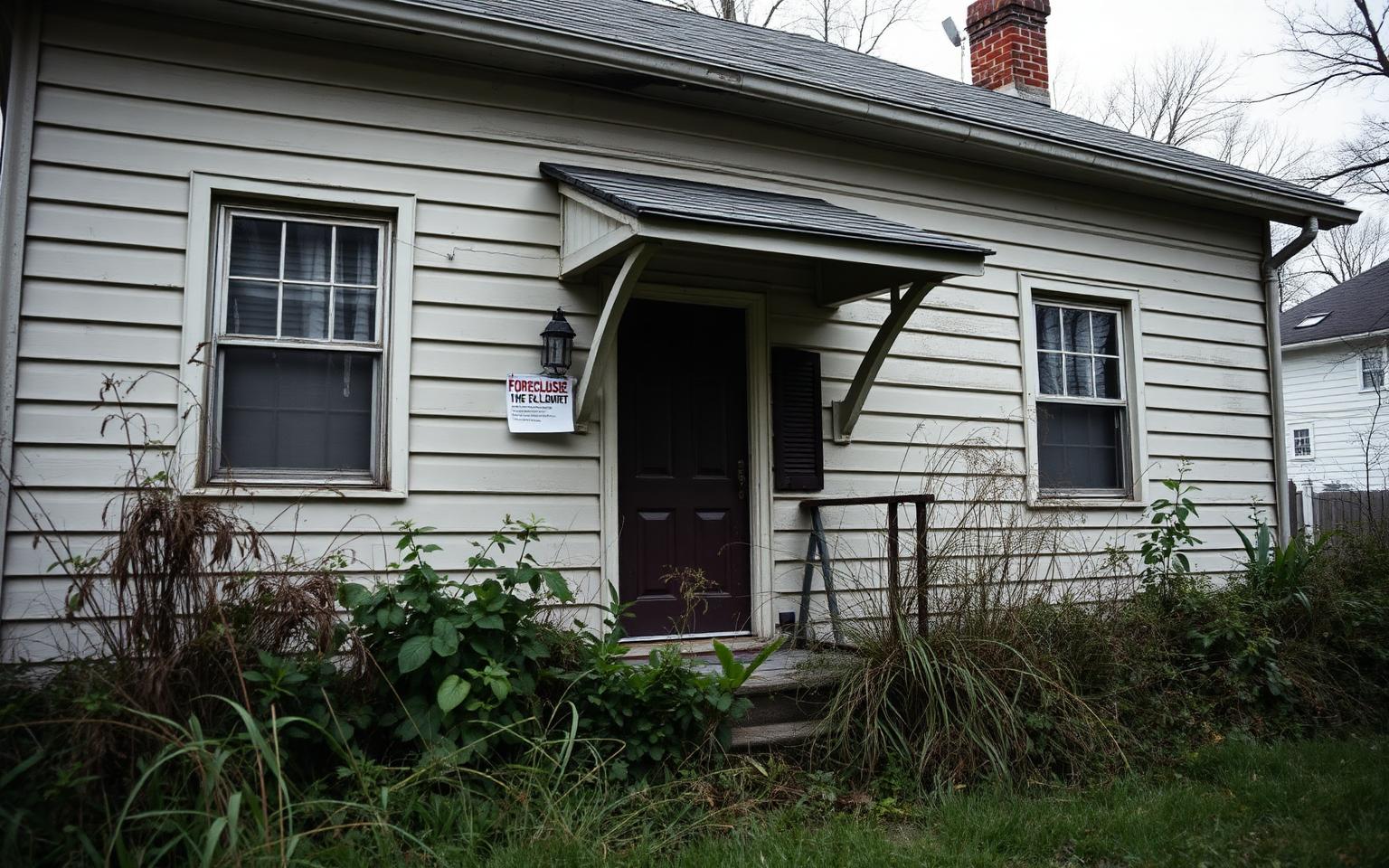
Driving for Dollars (D4D) is one of the lowest-cost methods to find off-market deals. It involves physically scouting neighborhoods to find properties showing signs of neglect or abandonment. These signs suggest a tired landlord or an owner who can no longer maintain the asset.
What to Look For
- Overgrown grass or unkempt landscaping.
- Boarded-up windows or peeling paint.
- Stack of newspapers or overflowing mailboxes.
- Code enforcement stickers on doors.
Once a property is identified, use apps like DealMachine or PropStream to find the owner's contact info. This process, known as skip tracing, provides phone numbers and mailing addresses for owners who do not reside at the property.
Direct Mail Marketing for Real Estate Leads
Direct mail remains a staple for professional investors because it is scalable. By mailing letters or postcards to a targeted list of owners, you can predictably generate leads every month. The key to direct mail isn't the volume—it is the quality of the list.
Instead of mailing an entire zip code, filter your list for 'High Equity' + 'Out of State Owners' + 'Non-Owner Occupied.' This identifies people who have a financial cushion and may be tired of managing a remote investment property.
Consistency is vital. Most sellers do not call after the first postcard. It often takes 5 to 7 'touches' over a period of 6 months before a seller feels ready to pick up the phone.
Probate and Tax Delinquent Property Lists
Public records are gold mines for identifying motivated sellers. Two specific categories consistently yield the highest discounts: Probate and Tax Delinquencies.
Probate Investing
When a property owner passes away, the heirs often inherit a property they do not want or cannot afford to maintain. These properties are frequently older and require significant renovation, making them perfect candidates for fix-and-flip bridge financing.
Tax Delinquencies
Owners who have fallen behind on property taxes are often facing financial hardship. If they don't sell, the county may eventually auction the house. Offering to buy the property before it goes to auction allows them to pay off the tax lien and walk away with some cash.
Building a Wholesaler Referral Network
Many full-time investors don't find their own deals; they buy them from wholesalers. A wholesaler's entire job is to execute the marketing strategies mentioned above and then 'assign' the contract to an end-buyer for a fee.
- Join local REIA (Real Estate Investor Association) groups.
- Tell every wholesaler exactly what your 'buy box' is (e.g., 3-bed 2-bath in specific zip codes).
- Show proof of funds to prove you are a serious buyer.
- Perform on your promises. If you say you'll close in 14 days, ensure your financing is ready.
Networking and 'Invisible' Leads
Some of the best deals never reach a list. They come through professional word-of-mouth. To tap into these, you must network with individuals who interact with distressed homeowners first.
- Eviction Attorneys: They represent landlords who are ready to exit the business.
- Estate Planning Attorneys: They have early knowledge of upcoming probate situations.
- Property Managers: They know which owners are frustrated with their current rentals.
- Utility Workers: They see the blue-taped meters and neglected exteriors before anyone else.
Real-World Example
An investor in Phoenix used a targeted direct mail campaign focusing on non-owner-occupied properties with over 50% equity. After 4 months of mailing, they connected with a seller in California who had inherited a 3-bedroom home in Arizona. The property had been vacant for two years and had several code violations. The market value fixed up was $450,000, but it needed $60,000 in work. Because the seller wanted a quick closing without repairs, the investor negotiated a $290,000 purchase price. By using a bridge loan to fund the acquisition and renovation, the investor avoided using their own capital for the bulk of the project and exited with a profit of $75,000 after all costs and financing fees.
For illustration only — subject to underwriting.
Common Mistakes To Avoid
- 1.Failing to follow up with leads multiple times.
- 2.Bidding based on emotion rather than a strict 70% ARV formula.
- 3.Not verifying the owner's legal authority to sell (especially in probate).
- 4.Underestimating renovation costs on distressed properties.
- 5.Implicitly searching for owner-occupied properties instead of strictly non-owner-occupied investment assets.
Advanced Tips
- Use 'Reverse Driving for Dollars' where you leave a note when you see a contractor at a house.
- Automate your skip tracing using API integrations with your CRM.
- Target 'Zombie Foreclosures' where the owner has moved out but the bank has not finished the foreclosure.
- Partner with local mail carriers who know which houses have been empty for weeks.
How Simple Solution Lending Helps
Finding the deal is only half the battle; closing it requires reliable capital. Because off-market properties are often in disrepair, traditional banks rarely finance them. Simple Solution Lending provides specialized financing for non-owner-occupied investment properties only. Whether you need a bridge loan to secure a quick purchase or a fix-and-flip loan that covers 100% of renovation costs, we provide the speed to match your off-market negotiations.
Our process is designed for the professional investor. We prioritize the asset's potential and your experience. If you are looking to scale your portfolio with off-market rentals, our DSCR loans allow you to qualify based on property cash flow rather than personal income. Pre-qualify today to ensure that when you find a motivated seller, your funding is already lined up.
Conclusion
Mastering off-market deal sourcing is what separates hobbyist investors from full-scale professionals. By implementing a multi-channel strategy including direct mail, probate lists, and networking, you create a consistent pipeline of opportunities that never see the light of the MLS.
Stay disciplined with your numbers, follow up relentlessly, and ensure your financing is ready. The next great deal is likely already out there—it just hasn't been listed yet.
Frequently Asked Questions
Disclaimer. Loan programs, rates, terms, leverage, and approvals are subject to underwriting, borrower qualification, property type, state availability, and program guidelines. This is not a commitment to lend.