Understanding Foreclosure Auctions
Master the foreclosure auction process. Learn about due diligence, cash requirements, and how to finance investment properties purchased at trustee sales.

Table of Contents
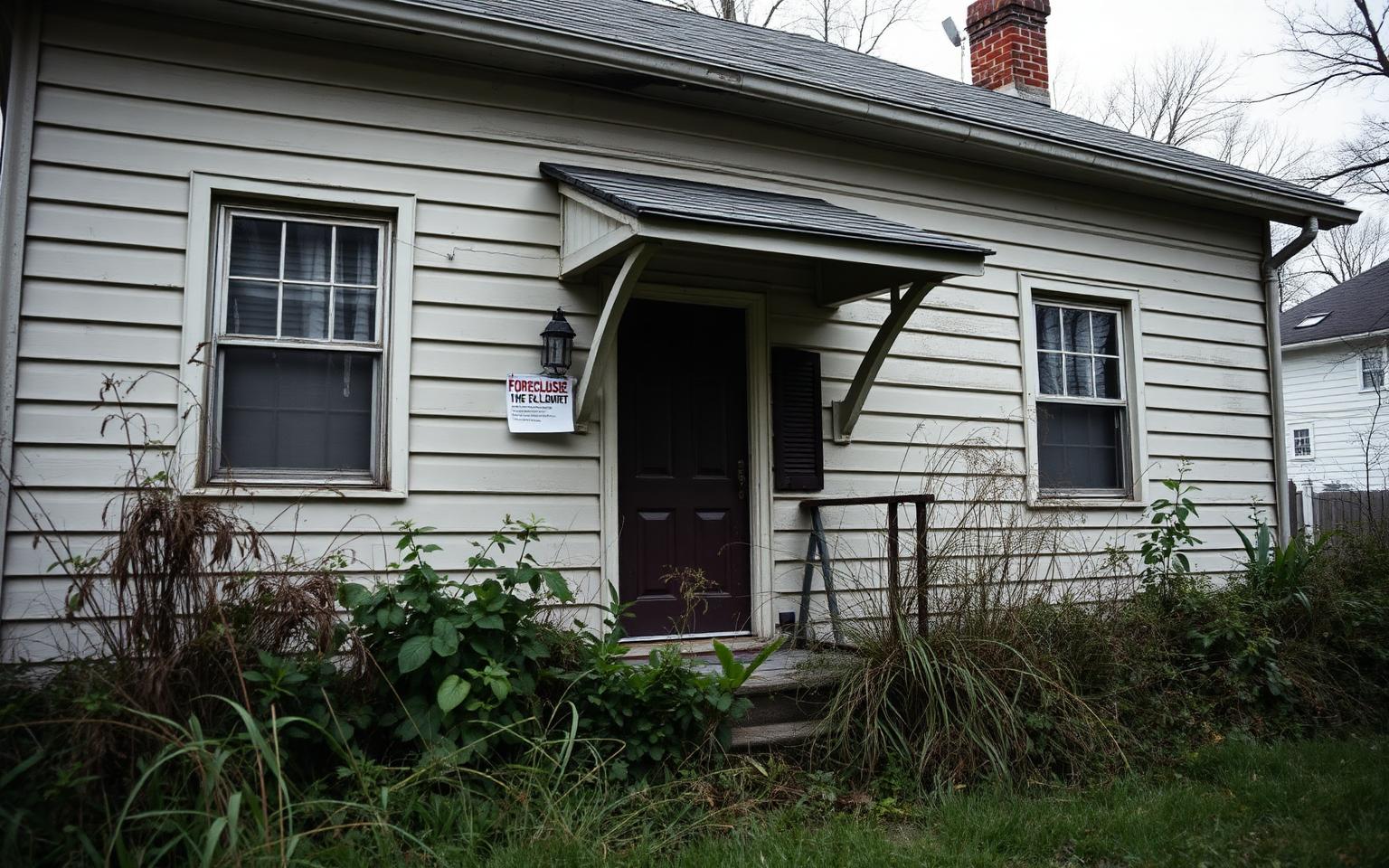
Foreclosure auctions represent one of the most direct methods for real estate investors to acquire property with built-in equity. Whether through a judicial foreclosure or a non-judicial trustee sale, these auctions allow investors to bypass the traditional MLS and negotiate directly with the legal process of debt recovery. However, the high potential for profit is balanced by extreme operational risks that can bankrupt an unprepared investor.
This guide is designed for serious US-based real estate investors looking to scale their portfolios through distressed acquisitions. We will cover the mechanics of the auction floor, the rigorous due diligence required when you cannot enter the property, and the specific capital requirements necessary to participate.
Understanding these rules is critical because foreclosure purchases are strictly for investment purposes. At Simple Solution Lending, we specialize in providing the bridge and permanent financing required to stabilize these assets after the hammer falls, provided the property is used for non-owner-occupied investment strategies only.
The Mechanics of a Foreclosure Auction
Foreclosure auctions, often held on the courthouse steps or through online portals, are the final step in a lender's attempt to recover the balance of a defaulted loan. In judicial states, this process is overseen by a court; in non-judicial states, a trustee handles the sale according to the terms of the Deed of Trust.
The auction starts with an 'opening bid,' which is typically the outstanding loan balance plus interest, late fees, and legal costs. If no one outbids the lender, the property becomes Real Estate Owned (REO) by the bank. If an investor outbids the lender, they win the property—usually in 'as-is' condition with no warranties.
Trustee Sales vs. Judicial Sales
It is vital to distinguish between these two. Trustee sales move faster and often have no right of redemption for the previous owner. Judicial sales may come with a 'Statutory Right of Redemption,' allowing the borrower to buy back the property months after the auction, which can freeze an investor's capital and renovation plans.
Due Diligence: Inspecting the Invisible
The greatest challenge of auction investing is the inability to conduct a traditional interior inspection. Investors are buying 'blind,' which necessitates a different framework for risk assessment.
- Title Search: You must ensure you are bidding on a first-position lien. Bidding on a second mortgage does not wipe out the first, meaning you could inherit a massive debt.
- Lien Check: Look for IRS tax liens, municipal liens, or utility assessments that survive the foreclosure process.
- Drive-by Inspection: While you cannot enter, you can assess the roof condition, neighborhood quality, and evidence of occupancy.
- Occupancy Status: If the property is occupied, you must factor in the time and legal costs of eviction, which varies significantly by state.
Always check the 'Notice of Sale' for the specific legal description. Addresses can be wrong; the legal description of the land is what you are actually buying.
Capital Requirements and Cash Strategies
Foreclosure auctions are almost exclusively 'cash-only' events. Traditional mortgage financing cannot be used at the moment of sale because there is no time for appraisals or underwriting. Investors must have liquid funds available immediately.
Requirements typically include a cashier's check for a set deposit amount (e.g., $5,000 to $25,000) just to register, with the remaining balance due within a very short window—often by the end of the business day or within 24 hours.
- Cashier's Checks: Usually required in various denominations to ensure you can pay the exact winning bid.
- Proof of Funds: For online auctions, you may need to upload bank statements and have a hold placed on your credit card or bank account.
- Total Acquisition Cost: Remember to budget for the bid price PLUS immediate insurance, securing the property, and initial cleanup.
The Risk of Junior Liens and Title Issues
A common rookie mistake is bidding on a property thinking it's a steal, only to realize they purchased a junior lien. In some jurisdictions, a Homeowners Association (HOA) can foreclose on a small amount of unpaid dues. If you buy that HOA foreclosure, the primary mortgage (which could be hundreds of thousands of dollars) remains attached to the property.
Furthermore, title insurance is not provided at the auction. You are receive a Trustee's Deed or Sheriff's Deed. You will need to perform a 'quiet title' action or work with a specialized title company post-purchase to ensure the property can eventually be sold with a clean title policy.
Post-Auction: From Gavel to Exit
Winning the bid is just the beginning. Once you have the deed, your priority is to secure the asset. This involves changing locks (if legal in your jurisdiction) and assessing the interior damage you couldn't see before. This is where your 'contingency budget' becomes reality.
If the property is for a fix-and-flip strategy, you move immediately into the renovation phase. If it is a long-term rental (DSCR) play, you focus on 'habitability' to get a tenant in place as quickly as possible. Throughout this process, the property must remain non-owner-occupied to maintain eligibility for investor-specific financing.
Financing Options for Auction Winners
While you need cash to win the auction, you don't need to leave that cash 'trapped' in the property. Savvy investors use a 'Delayed Purchase' or 'Recapitalization' strategy. Once you have the deed, you can bring in a private lender like Simple Solution Lending to provide a bridge loan or a fix-and-flip loan based on the property's value.
- Bridge Loans: Used to pull your initial capital back out so you can bid on the next auction.
- Fix-and-Flip Loans: Provides the capital for renovations once the property is secured.
- DSCR Loans: Once the property is renovated and leased, a Debt Service Coverage Ratio loan provides long-term, 30-year fixed rate financing without requiring personal income verification.
Real-World Example
An investor targeted a property in Phoenix with an estimated After Repair Value (ARV) of $450,000. The opening bid was $210,000. Through a preliminary title search, the investor confirmed the lien was in first position. On auction day, the investor brought $250,000 in cashier's checks.
After competitive bidding, they won the property for $265,000. They immediately paid the balance. Upon entry, they discovered $40,000 in deferred maintenance and trash-out costs. Total investment: $305,000. After a 4-month renovation, the property sold for $460,000. After commissions, holding costs, and closing fees, the net profit exceeded $100,000. Importantly, they used a bridge loan from a private lender 2 weeks after the auction to recover $200,000 of their cash to use for their next deal.
For illustration only — subject to underwriting.
Common Mistakes To Avoid
- 1.Bidding on a junior lien (2nd or 3rd mortgage) by mistake.
- 2.Failing to account for the 'Right of Redemption' period in certain states.
- 3.Overestimating the ARV without seeing the interior condition.
- 4.Not having enough liquid cash for the immediate closing requirement.
- 5.Neglecting to check for federal tax liens which have a 120-day redemption period.
Advanced Tips
- Develop a relationship with a local title officer who can run 'pro-forma' reports quickly.
- Track 'Postponements' to see which properties keep getting pushed back; these often indicate title issues or bankruptcy filings.
- Use a 'daily auction list' service to stay ahead of the thousands of filings in your county.
- Assess the 'debt-to-equity' ratio of the defaulting owner to estimate how high the bidding might go.
How Simple Solution Lending Helps
Simple Solution Lending is built to support the speed at which auction investors operate. While we do not provide the initial 'cashier's check' for use at the courthouse steps, we are the primary partner for the 'Second Stage' of the investment. Once you have secured the deed, our bridge and fix-and-flip programs allow you to refinance your cash out of the deal in as little as 10-14 days. This liquidity is what enables professional investors to move from one auction to the next without waiting for a property to sell.
Our funding is strictly for non-owner-occupied investment properties. We offer DSCR rentals for long-term holds and interest-only bridge loans for quick flips. By applying for pre-qualification now, you can walk onto the auction floor knowing exactly what your leverage options look like once the property is in your name.
Conclusion
Foreclosure auctions are not for the faint of heart, but they are one of the last remaining frontiers for finding deep value in a competitive real estate market. Success requires a blend of rigorous title research, disciplined bidding, and a readiness to handle the unexpected once you cross the threshold of the property.
By combining your local market expertise with the flexible, non-owner-occupied financing solutions from Simple Solution Lending, you can build a scalable system for acquiring, renovating, and profiting from distressed assets.
Frequently Asked Questions
Disclaimer. Loan programs, rates, terms, leverage, and approvals are subject to underwriting, borrower qualification, property type, state availability, and program guidelines. This is not a commitment to lend.