Private Money vs Hard Money Loans
Compare private money vs hard money loans. Learn about costs, speed, and requirements for non-owner-occupied investment property financing in the US.
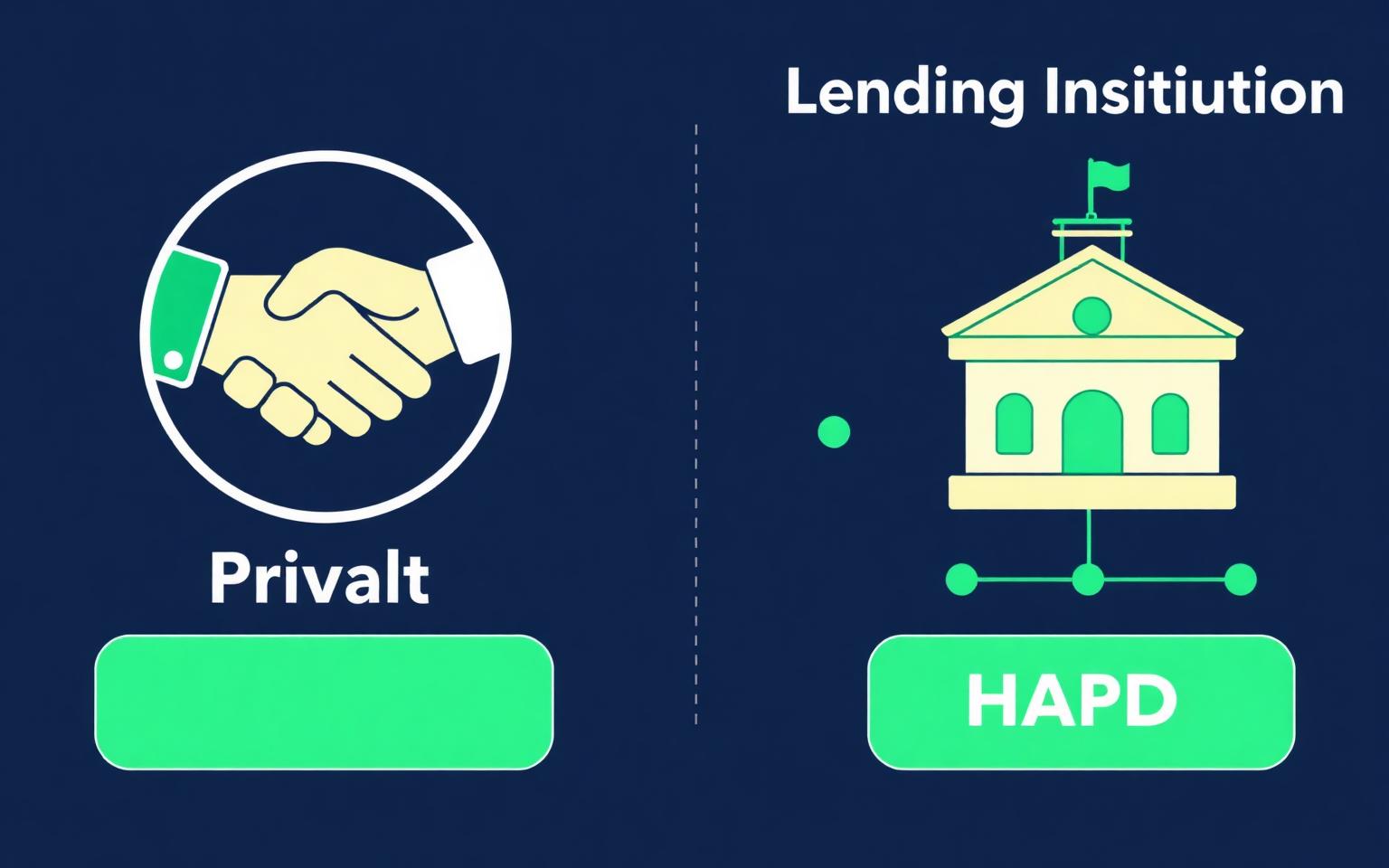
Table of Contents
The terms 'private money' and 'hard money' are often used interchangeably in the real estate industry, yet they represent distinct categories of capital with different regulatory frameworks, costs, and expectations. For the active real estate investor, understanding these nuances is the difference between a deal that closes on time and one that falls through at the 11th hour.
This guide is written for US-based investors focusing on non-owner-occupied investment properties—including fix-and-flip, BRRRR, and new construction projects. Whether you are scaling a portfolio or starting your first renovation, knowing which source of capital to leverage is critical for maintaining liquidity and minimizing debt service costs.
You will learn the legal definitions of these lending types, the current market rates for 2024-2025, how flexibility varies between institutional and individual lenders, and why the non-owner-occupied designation is non-negotiable for professional bridge and DSCR financing.
Defining Hard Money and Private Money in 2024
Hard money is short-term, asset-based lending provided by professional companies. These lenders are managed by a group of partners or funded by institutional capital. The 'hard' in hard money refers to the reliance on the hard asset—the real estate—rather than the borrower's personal creditworthiness or income. These loans are designed specifically for investment purposes, such as fix-and-flips or bridge financing, and are strictly for non-owner-occupied properties.
Private money, in its purest sense, comes from individuals. These are often high-net-worth individuals, friends, family, or business associates who lend their own capital. Unlike hard money lenders, private money lenders are not usually in the business of lending as their primary profession. Their terms are often more flexible, but their capital capacity is limited by their personal liquidity.
Both hard money and private money lenders are generally exempt from many consumer protection laws (like TRID and RESPA) because they only fund non-owner-occupied investment properties. If a property is intended for personal residence, these lenders cannot legally fund it.
The Source of Capital: Who Is Writing the Check?
Understanding the source of capital helps you predict the lender's behavior and requirements. Hard money lenders typically fall into three categories:
- Direct Lenders: They have their own discretionary fund and make all decisions in-house.
- Broker-Lenders: They originate the loan but sell it to a larger institutional fund shortly after closing.
- Fund Managers: They manage a pool of capital from multiple accredited investors.
Private money sources are more personal. They might be an orthopedic surgeon looking for a 10% return on an idle IRA or a retired real estate developer who wants to stay active in the market without doing the physical work. Because the capital is theirs, they can waive certain requirements—like appraisals or credit checks—that a hard money lender, bound by its board or capital partners, cannot.
Cost Comparison: Points, Interest, and Fees
Hard money lenders typically follow market-based pricing. As of 2024, an investor can expect interest rates ranging from 9% to 13%, with 1 to 3 points (origination fees) due at closing. These lenders also charge for third-party services like appraisals (approx. $500–$1,000), legal documentation fees ($750–$1,500), and draw inspection fees for construction projects ($150–$250 per visit).
Private money costs are highly variable. A private individual might charge a flat 10% interest rate with no points because they don't have the overhead of a large office. Conversely, a private person might demand a 50/50 profit split on a flip in exchange for providing 100% of the capital. While 'points' are less common in private money, the total cost of capital can often be higher if equity splits are involved.
Summary Table: Typical Market Terms
- Hard Money Interest: 9% - 13%
- Private Money Interest: 6% - 15% (highly variable)
- Hard Money Points: 1 - 3
- Private Money Points: 0 - 2
- Hard Money LTV: 75% - 90% of purchase price
- Private Money LTV: Up to 100% (based on relationship)
Flexibility and Underwriting Speed
Speed is the primary reason investors choose these alternative lending sources over conventional bank loans. A hard money lender can typically close a deal in 7 to 14 days. They require a formal application, a property appraisal (or internal valuation), and a title search. Their flexibility lies in their willingness to fund distressed properties that a bank would reject.
Private money is the fastest option in existence. If the relationship is established, a private lender can wire funds in 24 to 48 hours. There is often no formal underwriting process; if the individual trusts the investor and the deal's numbers, they fund it. However, this speed is contingent on the individual having the cash liquid at that exact moment. Hard money lenders, being institutional, have a more consistent and reliable supply of capital.
Regulatory Requirements for Non-Owner-Occupied Loans
Whether you use hard money or private money, the loan must be for a business purpose. In the United States, lending for owner-occupied residential properties is governed by the Dodd-Frank Wall Street Reform and Consumer Protection Act. This legislation requires lenders to verify a borrower's ability to repay based on debt-to-income ratios and other strict criteria.
Hard money and private money lenders avoid these regulations by exclusively funding non-owner-occupied investment properties. This is why you will be required to sign an 'Occupancy Affidavit' at closing, stating that you do not intend to live in the property. Violating this can lead to the loan being called due immediately and potential legal repercussions for mortgage fraud.
When to Use Hard Money vs Private Money
Use Hard Money when you need professional reliability and high leverage. Hard money lenders are built to handle multiple deals simultaneously. If you are doing 5 flips at once, a single private lender likely won't have the $1.5M+ liquidity to support you. Hard money lenders also provide 'construction draws,' which are structured disbursements of funds to pay for renovations as work is completed.
Use Private Money when you have a unique deal that doesn't fit standard boxes. For example, if you are buying a property that requires a very high loan-to-value (LTV) because you found a massive discount, or if you need a partner to provide the down payment as well. Private money is also ideal for very small deals (under $50,000) that most hard money lenders won't touch because the administrative costs are too high for the low interest yield.
Real-World Example
Investor A uses a Hard Money Lender to buy a property for $200,000 with a $50,000 renovation budget. The lender provides 90% of the purchase price ($180,000) and 100% of the renovation costs ($50,000) at 11% interest and 2 points. Investor A's out-of-pocket cost is $20,000 plus closing costs. The lender requires an appraisal and a formal scope of work. Total financing cost over 6 months: ~$16,650.
Investor B uses a Private Money Lender (a former colleague) for a similar $250,000 total project. The private lender provides the full $250,000 (100% financing) in exchange for 10% interest and a 20% split of the final profits. If the project nets $60,000 in profit, Investor B pays $12,500 in interest plus $12,000 in profit share. Total financing cost: $24,500. While more expensive, Investor B had zero out-of-pocket costs and closed in 3 days.
For illustration only — subject to underwriting.
Common Mistakes To Avoid
- 1.Failing to confirm the lender funds non-owner-occupied properties only, leading to mid-escrow denials.
- 2.Not accounting for 'junk fees' like document prep, processing, and wire fees in hard money loans.
- 3.Assuming a private lender always has the cash ready; individuals may have their funds tied up in other assets.
- 4.Neglecting to have a clear exit strategy (refinance or sale) for high-interest short-term debt.
- 5.Miscalculating the construction draw schedule, leading to cash flow gaps during the renovation.
Advanced Tips
- Negotiate 'extension options' upfront in your hard money loan docs to avoid default if the project runs late.
- Use a hard money lender for your first 3 deals to build a track record that attracts cheaper private money.
- Always use a third-party title company and attorney even with private money to ensure a clean lien position.
- Look for 'cross-collateralization' opportunities where a hard money lender can use equity in one property to fund 100% of another.
- Build a 'Credibility Kit' with photos and HUDs from past deals to secure lower rates from professional lenders.
How Simple Solution Lending Helps
Simple Solution Lending specializes in the hard money and bridge space, providing professional capital for non-owner-occupied investment properties. We offer fix-and-flip financing, ground-up construction loans, and long-term DSCR rental loans for investors who need reliable, fast execution without the red tape of traditional banks.
Our programs are designed for the serious investor. We focus on the asset's value and the project's viability, offering up to 90% of purchase price and 100% of renovation costs. As a firm committed to non-owner-occupied lending, we provide the speed of a private individual with the institutional reliability of a professional firm. You can apply now or pre-qualify online to see how our capital can scale your real estate business.
Conclusion
Choosing between hard money and private money depends on your project scale, your relationship network, and your liquidity. Hard money offers a scalable, professional framework for active flippers, while private money offers unparalleled flexibility for unique or small-scale deals.
Regardless of the source, ensure your financing is structured for non-owner-occupied investment use to stay compliant and protect your portfolio. With the right leverage, you can maximize your internal rate of return and move more quickly on high-margin opportunities in today's competitive real estate market.
Frequently Asked Questions
Disclaimer. Loan programs, rates, terms, leverage, and approvals are subject to underwriting, borrower qualification, property type, state availability, and program guidelines. This is not a commitment to lend.