How to Get Approved for an Investment Property Loan
Learn the specific requirements for investment property loan approval, including credit scores, reserves, and DSCR ratios for non-owner-occupied properties.
Table of Contents
Securing financing for an investment property is fundamentally different from obtaining a primary residence mortgage. While conventional lenders focus heavily on your personal debt-to-income (DTI) ratio, private and asset-based lenders prioritize the property's income-generating potential. This distinction is critical for investors looking to scale their portfolios without being limited by personal income constraints.
This guide is designed for real estate investors—both novices and seasoned pros—targeting non-owner-occupied properties such as fix-and-flips, long-term rentals (DSCR), and multi-family units. You will learn the exact requirements lenders look for, including liquidity thresholds, credit score benchmarks, and property-specific metrics that drive approval decisions.
By understanding these hurdles before you submit an application, you can position yourself as a low-risk borrower. Whether you are looking for a bridge loan to renovate a distressed asset or a long-term DSCR loan to hold a stabilized rental, the following framework outlines the path to a clear approval.
The Difference Between Investor Loans and Consumer Mortgages
Investment property loans are strictly for non-owner-occupied real estate. This means the borrower does not intend to reside in the property at any time. Because these are business-purpose loans, they are exempt from many of the consumer protections associated with the Truth in Lending Act (TILA), allowing for faster processing and more flexible terms based on asset performance.
Lenders in this space, such as Simple Solution Lending, look at the project's viability. For a fix-and-flip, this means the After Repair Value (ARV). For a rental, this means the Debt Service Coverage Ratio (DSCR). While your personal financial health still matters, it is often secondary to the math of the deal itself.
Credit Score Minimums and Financial Health
Your credit score serves as a proxy for your reliability as a borrower. While you don't need a perfect 850, your score heavily influences your interest rate and required down payment.
- Tier 1 (740+): Access to the lowest rates and highest Leverage (up to 80-85% LTC/LTV).
- Tier 2 (680-739): Standard investor pricing with moderate leverage options.
- Tier 3 (620-679): Likely requires a larger down payment (25-30%) and higher interest rates.
- Below 620: Difficult to secure standard investment terms; may require specialized hard money bridge lending.
Always check for 'Zombie' accounts or errors on your report 60 days before applying. A 20-point swing can cost you thousands in interest over the life of a loan.
Liquidity and Reserve Requirements
Lenders want to know you won't go into default if the property sits vacant for two months or needs an unplanned water heater replacement. Reserves are typically measured in 'months of PITIA' (Principal, Interest, Taxes, Insurance, and HOA dues).
Standard Reserve Benchmarks
For a standard DSCR rental loan, most lenders require 3 to 6 months of liquid reserves. For fix-and-flip projects, you must demonstrate enough cash to cover the down payment, closing costs, and the first few months of interest payments before the first draw is released.
- Down Payment: Usually 15% to 25% of the purchase price.
- Closing Costs: Budget 2% to 5% of the loan amount.
- Interest Reserves: Cash on hand to carry the debt during the renovation phase.
Understanding the Debt Service Coverage Ratio (DSCR)
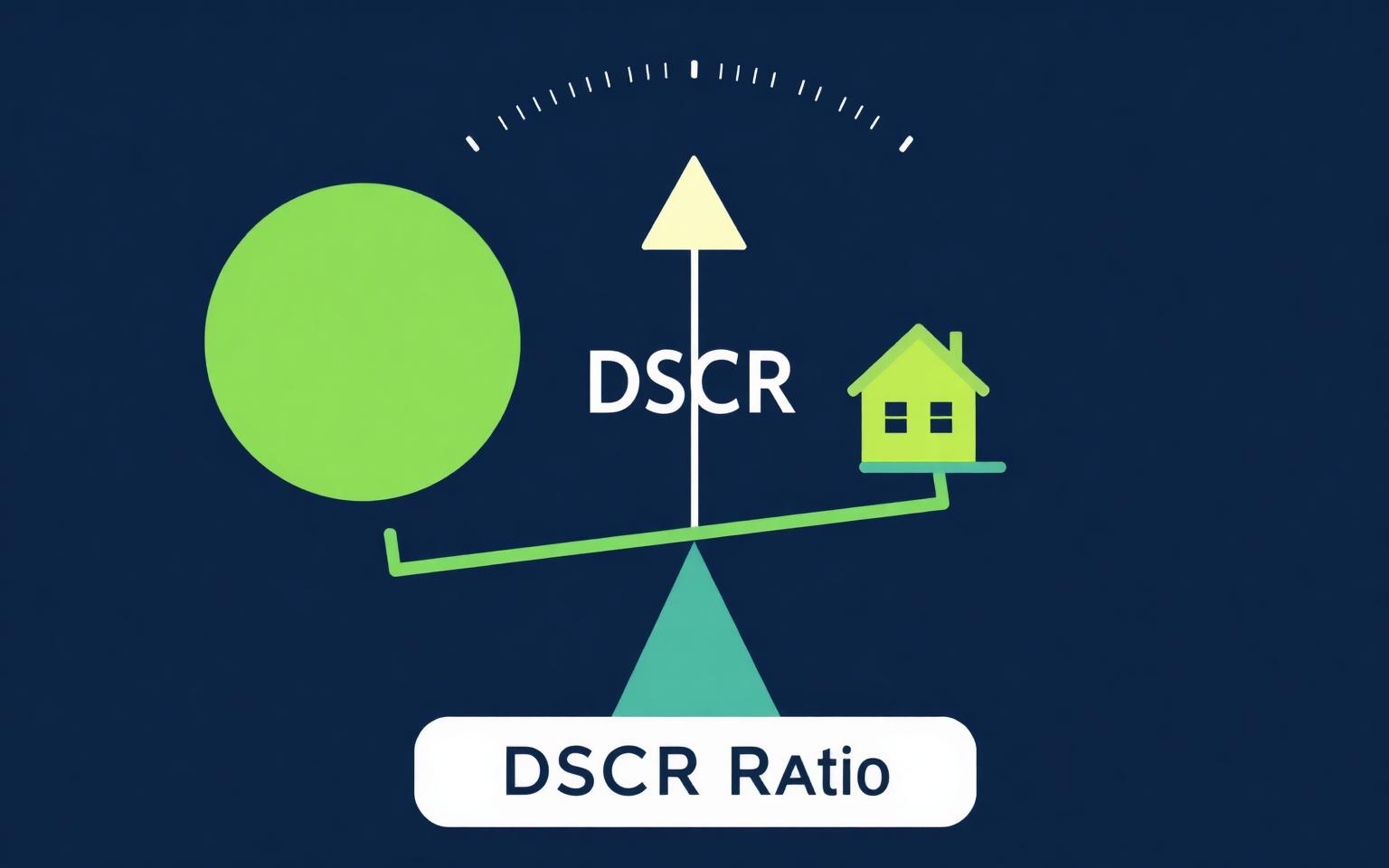
The DSCR is the primary metric for long-term investment property loans. It compares the property's gross rental income to its annual debt obligations. The formula is: Gross Monthly Rent / Monthly PITIA.
A ratio of 1.0 means the property breaks even. Most lenders prefer a DSCR of 1.20 or higher. For example, if your total mortgage payment is $2,000, the property should generate at least $2,400 in monthly rent. Some programs allow for 'no-ratio' (under 1.0) loans if the borrower has high liquidity and a strong credit score, but these come with higher rates.
Documentation Checklist for Investors
Private lenders require less 'red tape' than big banks, but you still need a clean file to move quickly. For an investment property loan, gather the following:
- Entity Documents: Most investors borrow under an LLC. You'll need Articles of Organization, Operating Agreement, and an EIN letter.
- Bank Statements: Two most recent months to verify down payment funds and reserves.
- Property Management Agreement: If you aren't self-managing.
- Lease Agreements: For occupied units, or a 'market rent' estimate (Form 1007) for vacant ones.
- Experience Track Record: A list of properties flipped or managed in the last 36 months to qualify for better rates.
Property Type and Condition Considerations
The loan type you choose must match the property's current state. Not all non-owner-occupied properties are eligible for every loan program.
If a property is 'un-habitable' (missing a kitchen, has structural issues, or no running water), it will not qualify for a DSCR or conventional loan. These require a Bridge or Fix-and-Flip loan. Once the property is renovated and a certificate of occupancy is issued, it can be refinanced into a long-term rental loan.
Lenders also distinguish between property classes. Single-family residences (SFR) and 2-4 unit small multi-family properties are standard. Commercial multi-family (5+ units) usually requires more rigorous underwriting and a different set of appraisal standards based on Cap Rates.
Real-World Example
An investor identifies a duplex in a growing market priced at $400,000. Each unit rents for $1,500, totaling $3,000 in gross monthly income. The investor has a 720 credit score and applies for a DSCR loan at 75% LTV (Loan-to-Value).
The loan amount is $300,000. At a 7% interest rate, the principal and interest (P&I) is roughly $1,995. Taxes and insurance add $400, making the total monthly payment (PITIA) $2,395.
To calculate the DSCR: $3,000 / $2,395 = 1.25. Since the ratio is above 1.20 and the investor has $15,000 in liquid reserves (covering over 6 months of payments), the loan is approved swiftly. The investor closes in 21 days under their LLC without providing personal tax returns.
For illustration only — subject to underwriting.
Common Mistakes To Avoid
- 1.Applying for a loan as an owner-occupant to get lower rates when you intend to rent the property (this is mortgage fraud).
- 2.Commingling personal and business funds, making it impossible for lenders to track the source of down payment capital.
- 3.Ignoring the 'seasoning' period—some lenders require you to own a property for 6 months before refinancing based on a new appraisal.
- 4.Underestimating the renovation budget in a fix-and-flip, leading to a mid-project liquidity crunch.
- 5.Failing to account for vacancy and maintenance percentages in your personal cash flow projections.
Advanced Tips
- Build a 'Schedule of Real Estate Owned' (SREO) early; it proves experience and speeds up the underwriting process.
- For fix-and-flips, use a licensed contractor for your line-item budget to build lender confidence.
- Consider 'pre-payment penalty' options; accepting a 3-year penalty can significantly lower your interest rate on rental properties.
- Cross-collateralize assets if you are short on cash for a down payment but have equity in other investment properties.
How Simple Solution Lending Helps
Simple Solution Lending specializes exclusively in non-owner-occupied investment properties. We provide the capital you need for fix-and-flip projects, bridge financing, and long-term rental portfolios. Unlike traditional banks, we focus on the asset's value and income potential, offering streamlined approvals with no personal income verification required.
Whether you are acquiring a distressed property for renovation or seeking a 30-year fixed DSCR loan for a stabilized rental, our team understands the nuances of the US investment market. Ready to scale? Apply Now or talk to a loan officer today to get pre-qualified for your next deal.
Conclusion
Getting approved for an investment property loan requires a shift in mindset. You must move away from personal DTI and focus on property-level performance. By maintaining a solid credit score, keeping 3-6 months of liquid reserves, and targeting properties with strong DSCR potential, you can unlock consistent access to capital.
Remember, your lender is your partner in growth. Professionalism in your documentation and a clear-eyed view of your property's financials will set you apart from amateur buyers and ensure your loan moves from application to funding without delays.
Frequently Asked Questions
Disclaimer. Loan programs, rates, terms, leverage, and approvals are subject to underwriting, borrower qualification, property type, state availability, and program guidelines. This is not a commitment to lend.