Understanding Real Estate Financing for Beginners
Master real estate financing for non-owner-occupied investment properties. Learn about DSCR, hard money, bridge loans, and portfolio lending for your first deal.
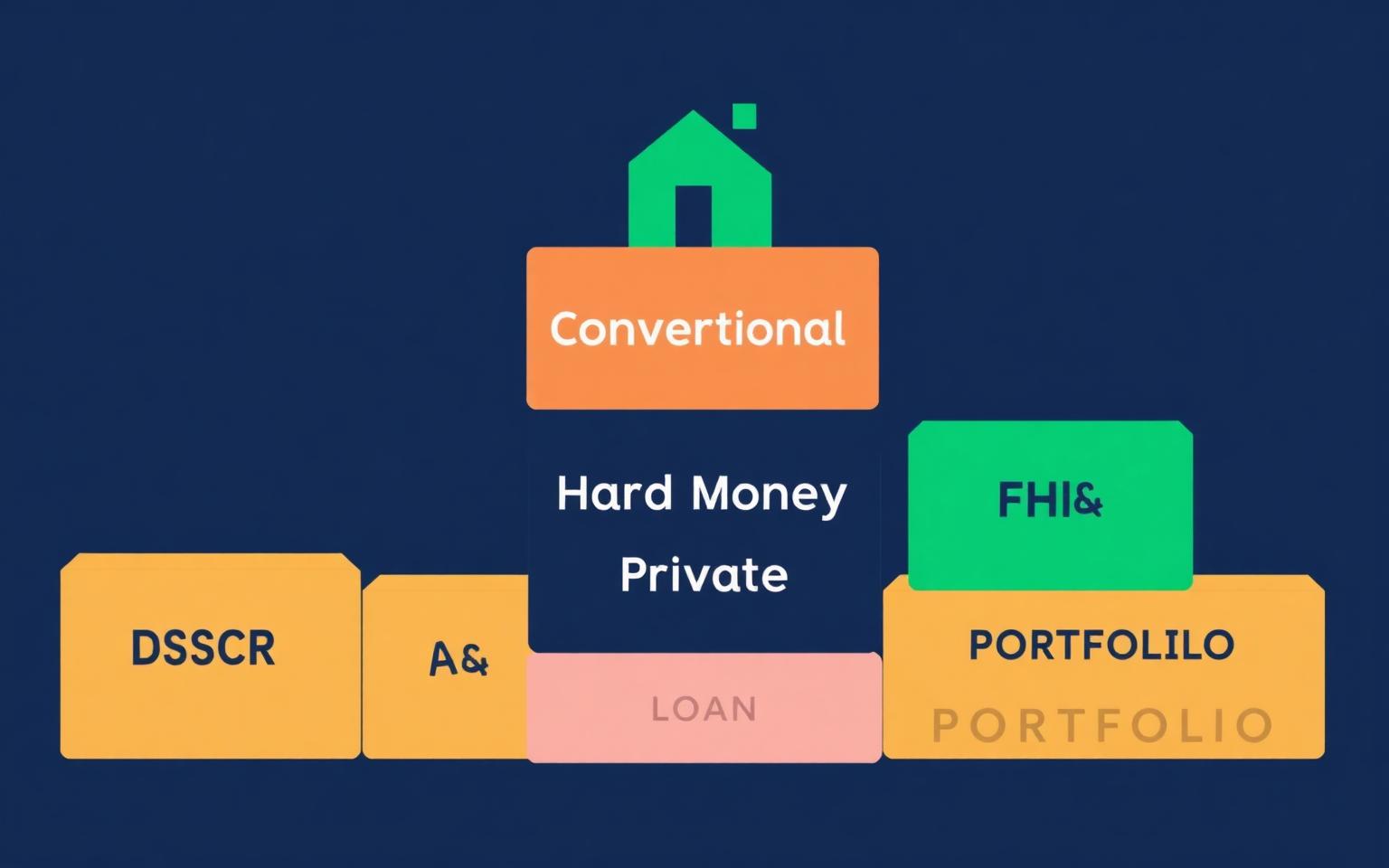
Table of Contents
Financing is the engine of a real estate investment business. For beginners, the primary hurdle isn't just finding a good deal, but understanding which debt structure allows that deal to work. This guide focuses on financing strategies for non-owner-occupied investment properties, which carry different risks, rewards, and requirements than a primary residence.
In the following sections, we will break down the capital stack, ranging from institutional conventional loans to high-leverage private money. You will learn the mechanics of Debt Service Coverage Ratio (DSCR) loans, the speed of bridge financing, and when to utilize a portfolio lender.
Whether you are planning your first single-family fix-and-flip or moving straight into a multi-family rental, the goal is to align your financing with your exit strategy. By the end of this article, you will have a clear blueprint for choosing the right loan for your first investment deal.
Conventional Loans: The Institutional Foundation
For many new investors, the first stop is a conventional loan backed by Fannie Mae or Freddie Mac. These are institutional products processed through traditional banks or credit unions. While they offer the lowest interest rates, they are also the most restrictive.
Conventional loans for investment properties typically require a higher credit score (680-720+) and a larger down payment than a primary residence. You should expect to put down 15% to 25% for a single-unit rental and up to 30% for a 2-4 unit property.
- Pros: Lowest long-term interest rates; 30-year fixed terms; stable payments.
- Cons: Lengthy approval process (30-45 days); strict DTI (Debt-to-Income) requirements; limited to 10 financed properties; cannot close in an LLC.
DSCR Loans: Financing Based on Asset Performance
Debt Service Coverage Ratio (DSCR) loans have become the gold standard for non-owner-occupied rental investments. Unlike conventional loans, DSCR lenders do not look at your personal income, tax returns, or employment history. Instead, they look at the property’s ability to pay for itself.
DSCR = Gross Monthly Rent / Monthly PITIA (Principal, Interest, Taxes, Insurance, HOA). A ratio of 1.0 or higher means the property generates enough cash flow to cover the debt.
Investors use DSCR loans to scale their portfolios because they can close in the name of an LLC, protecting personal assets. This is purely for non-owner-occupied investment properties, making it an ideal choice for the 'Buy, Rehab, Rent, Refinance, Repeat' (BRRRR) strategy.
Hard Money and Bridge Loans: Speed and Leverage
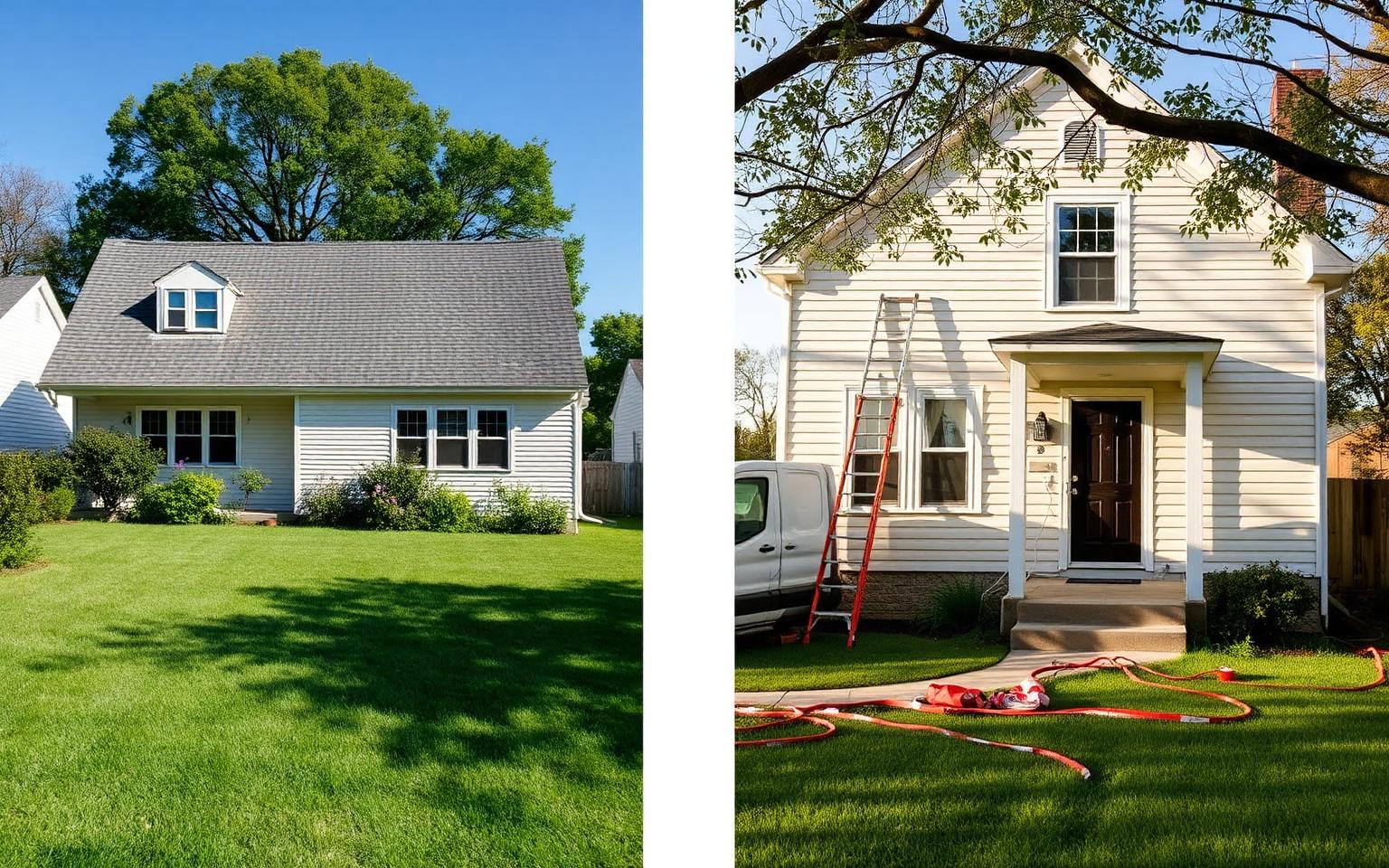
When a property is in poor condition—the typical 'fixer-upper'—traditional banks will not lend on it. This is where hard money or bridge financing comes in. These are short-term loans (typically 6 to 18 months) used to acquire and renovate a property.
How Hard Money Works
Hard money lenders focus on the After Repair Value (ARV). They may lend up to 90% of the purchase price and 100% of the renovation costs, as long as the total loan doesn’t exceed 70-75% of the ARV. This allows investors to enter deals with minimal cash out of pocket.
- Focus: Asset value and renovation budget over borrower credit.
- Speed: Can close in as little as 5-10 days.
- Cost: Higher interest rates (9% to 13%) and 1-3 points (origination fees).
- Utility: Best for fix-and-flips or the 'Buy' phase of a BRRRR.
The FHA Myth in Investment Real Estate
Many beginners hear about FHA loans (3.5% down) and assume they can use them for investment properties. This is a misunderstanding. FHA loans are strictly for owner-occupied properties. You must live in the property for at least one year.
The only way to use FHA for investing is through 'house hacking'—buying a 2-4 unit property, living in one unit, and renting the others. If you are looking for a true non-owner-occupied investment where you do not intend to reside, FHA is not an option. You must look toward DSCR or private capital.
Portfolio Loans: Flexibility for Multiple Properties
Portfolio loans are held on the lender’s own balance sheet rather than being sold to the secondary market like Fannie Mae loans. Because the lender keeps the risk, they can set their own rules.
Portfolio lenders often cater to investors who have unique situations: high net worth but low taxable income, or investors who want to blanket multiple properties under a single loan. These are typically offered by smaller community banks or specialized private lenders.
Private Money vs. Hard Money
While people often use these terms interchangeably, there is a nuance. Hard money typically refers to professional lending companies with structured terms and institutional backing. Private money usually refers to capital from individuals—friends, family, or local high-net-worth acquaintances.
Private money is the most flexible but often the hardest to secure for a beginner. Professional hard money lenders, like Simple Solution Lending, offer a middle ground: the speed of private capital with the reliability and scale of a professional financial institution.
Real-World Example
Imagine a property listed for $150,000 that needs $50,000 in work. A traditional bank won't touch it. The investor uses a Bridge/Hard Money loan at 90% of the purchase ($135,000) and 100% of the rehab ($50,000). Total loan: $185,000.
Six months later, the project is finished, and the property appraises for $280,000 (ARV). The investor then applies for a DSCR refinance. At 75% Loan-to-Value (LTV), the new DSCR loan amount is $210,000.
This $210,000 pays off the $185,000 bridge loan and covers closing costs. The investor effectively owns a cash-flowing rental property with nearly $0 of their own money left in the deal.
For illustration only — subject to underwriting.
Common Mistakes To Avoid
- 1.Underestimating renovation costs in a fix-and-flip budget.
- 2.Applying for a conventional loan when the property is in 'un-lendable' condition.
- 3.Ignoring the prepayment penalty on long-term DSCR loans.
- 4.Failing to account for 'holding costs' (interest, taxes, insurance) during the rehab phase.
- 5.Not having a clear exit strategy before the bridge loan matures.
Advanced Tips
- Use a 'delayed financing' exception if you bought a property with cash to pull your capital back out immediately.
- Cross-collateralize other equity-rich properties to achieve 100% financing on a new acquisition.
- Maintain a separate LLC for each major asset to isolate liability and simplify accounting.
- Focus on building a relationship with one reliable private lender rather than rate-shopping every deal.
How Simple Solution Lending Helps
At Simple Solution Lending, we specialize exclusively in non-owner-occupied investment properties. We provide the speed and flexibility that traditional banks simply cannot offer, focusing on the asset's potential rather than the borrower's personal debt-to-income ratio.
Whether you need a bridge loan for a quick fix-and-flip or a 30-year DSCR loan to build your rental portfolio, our team understands the nuances of real estate investing. We fund new construction, multi-family assets, and residential rentals for investors across the United States. To get started, you can apply now for a pre-qualification letter to strengthen your next offer.
Conclusion
Securing the right financing is the difference between a profitable real estate career and a stalled portfolio. For beginners, the journey usually starts with understanding that the 'cheapest' money (conventional) isn't always the best money if it prevents you from closing quickly or buying distressed assets.
By leveraging DSCR and bridge loans, you can treat your real estate investing as a scalable business. Focus on the numbers, ensure your property's cash flow supports the debt, and always work with lenders who understand the investment landscape.
Frequently Asked Questions
Disclaimer. Loan programs, rates, terms, leverage, and approvals are subject to underwriting, borrower qualification, property type, state availability, and program guidelines. This is not a commitment to lend.