Portfolio Financing Strategies for Experienced Investors
Scale your real estate business with portfolio loans, blanket mortgages, and cross-collateralization strategies for non-owner-occupied investment properties.
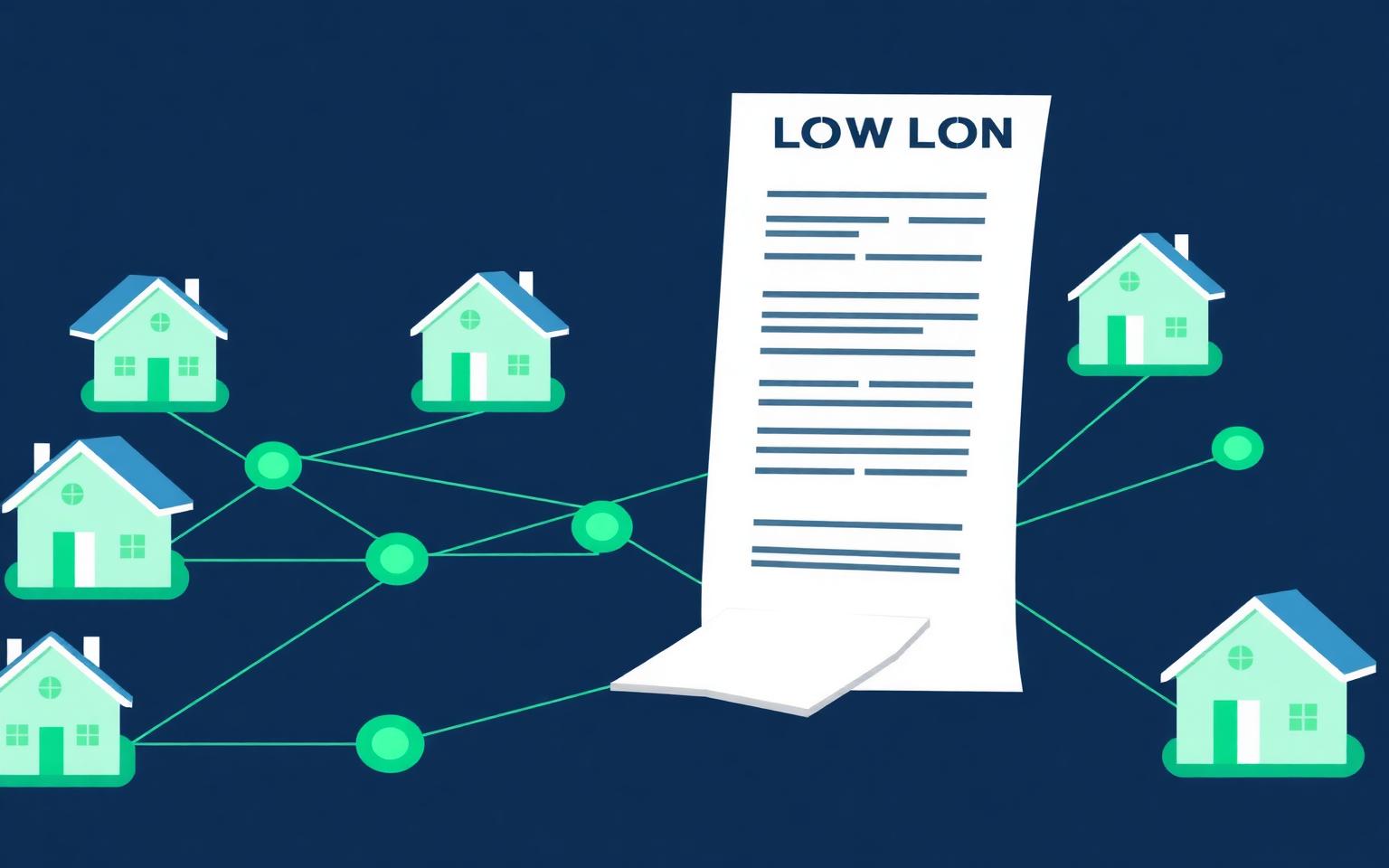
Table of Contents
Scaling a real estate portfolio requires a shift in mindset from individual asset management to holistic capital optimization. For experienced investors, the hurdle is rarely finding a good deal; it is the friction caused by managing ten or twenty separate conventional loans. At this stage, traditional financing becomes a bottleneck that slows acquisition speed and ties up excessive amounts of equity.
This guide explores advanced financing strategies designed specifically for non-owner-occupied investment properties. We will cover the mechanics of blanket loans, the utility of cross-collateralization, and how to utilize portfolio-wide cash-out refinances to fuel the next phase of your growth.
You will learn how to consolidate debt, lower your operational overhead, and unlock trapped equity. Whether you are managing single-family rentals (SFRs), multi-family units, or fix-and-flip projects, these strategies provide the liquidity necessary to stay competitive in a high-interest environment.
The Transition to Portfolio Financing
Most investors begin their journey with localized, individual asset financing. While this works for the first few properties, the complexity grows exponentially as the portfolio expands. Reporting requirements, varying maturity dates, and multiple monthly payments create an administrative burden that can distract from asset performance.
Portfolio financing treats several individual properties as a single collateral pool. This approach is exclusively for non-owner-occupied investment properties and is common in the private lending space. By grouping assets, investors can often negotiate better terms, streamline their reporting, and move away from the personal debt-to-income (DTI) restrictions found in conventional lending.
Understanding Blanket Loans for Investment Portfolios
A blanket loan is a single mortgage that covers two or more pieces of real estate. These are highly effective for investors who have acquired multiple rental properties over time and want to consolidate them into one streamlined facility.
The Release Clause: A Critical Component
One of the most important features of a blanket loan is the 'partial release clause.' This allows an investor to sell one property from the portfolio without triggering a requirement to pay off the entire loan. Usually, the lender requires 110% to 120% of the individual property's allocated loan amount to be paid back to release the lien.
- Single Monthly Payment: Consolidates administrative tasks across the portfolio.
- Uniform Interest Rate: Simplifies cash flow projections across diverse assets.
- Scalability: Private lenders look at the combined Debt Service Coverage Ratio (DSCR) of the pool, rather than individual tax returns.
Leveraging Cross-Collateralization to Preserve Liquidity
Cross-collateralization involves using equity from an existing property to secure a loan on a new acquisition. This is a powerful move for investors who have high equity positions in their current rentals but lack the immediate cash for a 20% or 25% down payment on a new deal.
If you have a free-and-clear investment property, you can cross-collateralize it to get 100% financing on a new fix-and-flip acquisition. This preserves your cash for the renovation costs or for earnest money on future deals.
Lenders will calculate the combined Loan-to-Value (CLTV) across all properties involved. If the combined value offers enough protection to the lender, the investor can often close a deal with 'zero out of pocket' capital, leveraging their existing non-owner-occupied assets as the down payment.
Strategic Cash-Out Refinancing at Scale
As property values appreciate or as you complete value-add renovations (forced appreciation), your portfolio accumulates 'lazy' equity. A portfolio-wide cash-out refinance allows you to pull that capital out in one lump sum to fund your next round of acquisitions.
DSCR-Based Portfolio Refinancing
Most private portfolio loans utilize the Debt Service Coverage Ratio (DSCR). The lender looks at the gross rents of the portfolio versus the principal, interest, taxes, insurance, and HOA fees (PITIA). If the ratio is typically 1.20x or higher, the portfolio is considered healthy. This allows the investor to bypass personal income verification, focusing strictly on the income-generating potential of the investment properties.
Capital Allocation: When to Use Bridge vs. Long-Term Debt
Successful portfolio growth requires matching the right debt to the right phase of the investment lifecycle. Mixing different loan products within a portfolio is common among elite investors.
- Bridge Loans: Best for rapid acquisition, properties needing stabilization, or short-term pivots. Usually 12-24 month terms.
- DSCR Long-Term: Best for stabilized rental portfolios where the goal is predictable cash flow and principal pay-down over 30 years.
- Ground-Up Construction: For investors adding new units to their portfolio; requires a lender specialized in non-owner-occupied residential builds.
Navigating Portfolio Limits and Concentration Risks
While scaling, investors must be aware of 'concentration risk'—having too many assets in one specific zip code or asset class. Some portfolio lenders have limits on how much exposure they will take in a single market. Diversifying your portfolio geographically while keeping the financing under a single umbrella is possible but requires a lender with a national or multi-state footprint.
Additionally, check for 'per-borrower' limits. Many private lenders will cap their total exposure to a single investor or entity at $5 million to $10 million, though specialized institutional-backed lenders can go much higher for high-performing portfolios.
Real-World Example
An investor owned five single-family rentals (SFRs) in the Midwest, each worth $200,000, with a total market value of $1,000,000. They owed a combined $400,000 across five different conventional mortgages. The properties were generating $8,000 in monthly rent.
By utilizing a blanket cash-out refinance at 75% LTV, the investor secured a new loan of $750,000. After paying off the existing $400,000 in debt and $30,000 in closing costs, the investor walked away with $320,000 in tax-free liquidity. They used this 'dry powder' to put 25% down on a $1.2M 7-unit apartment building. In one transaction, the investor more than doubled their unit count and consolidated their debt into a single manageable payment, all while using non-owner-occupied financing that did not impact their personal credit capacity.
For illustration only — subject to underwriting.
Common Mistakes To Avoid
- 1.Over-leveraging the portfolio to the point where a 10% vacancy rate causes a total default.
- 2.Neglecting the partial release clause in blanket loans, making it difficult to sell off underperforming assets.
- 3.Failing to account for the impact of rising insurance premiums on a portfolio's DSCR.
- 4.Using short-term bridge debt for long-term hold assets without an ironclad exit strategy.
- 5.Mixing personal and business expenses, which complicates the underwriting for portfolio-level financing.
Advanced Tips
- Ladder your maturities: Avoid having all loans in a portfolio come due in the same year to mitigate interest rate risk.
- Maximize the 'unit count' discount: Lenders often offer better rates for portfolios of 10+ units compared to individual SFRs.
- Use a dedicated LLC for each portfolio group to isolate liability while maintaining financing efficiency.
- Negotiate 'interest-only' periods on portfolio loans to maximize cash-flow during the first 2-5 years of a growth phase.
- Maintain a 10% cash reserve of the total portfolio value to satisfy private lender liquidity requirements.
How Simple Solution Lending Helps
Simple Solution Lending specializes in provide the fuel for portfolio expansion. We understand that experienced investors need more than just a mortgage; they need a capital partner that understands the nuances of non-owner-occupied investment properties. Our suite of products—including DSCR long-term debt, bridge loans, and fix-and-flip lines of credit—is designed to help you scale without the red tape of traditional banks.
Whether you are looking to consolidate a dozen rental properties into one blanket loan or need to cross-collateralize an existing asset for a new high-value acquisition, we provide streamlined underwriting focused on asset performance. We fund non-owner-occupied properties only, ensuring our interests are perfectly aligned with your business goals. Visit our website to pre-qualify or Apply Now to see how much equity you can unlock.
Conclusion
Mastering portfolio financing is the difference between owning a few rental houses and running a professional real estate enterprise. By shifting to blanket loans and leveraging cross-collateralization, you remove the artificial barriers to growth imposed by conventional lending limits.
Focus on your DSCR, keep your equity working, and partner with a lender that understands the unique needs of the investment property market. With the right capital structure, your portfolio becomes a self-sustaining engine for wealth creation.
Frequently Asked Questions
Disclaimer. Loan programs, rates, terms, leverage, and approvals are subject to underwriting, borrower qualification, property type, state availability, and program guidelines. This is not a commitment to lend.